
The Rehabilitation Journey
Read about an inmate’s correctional journey, from incarceration and rehabilitation to reintegration into the community.
Last updated on 6 October 2026
This is a representative narrative of an inmate’s rehabilitation and reintegration journey. It does not depict a specific individual. Experiences, programmes and support may vary according to individual needs and circumstances.
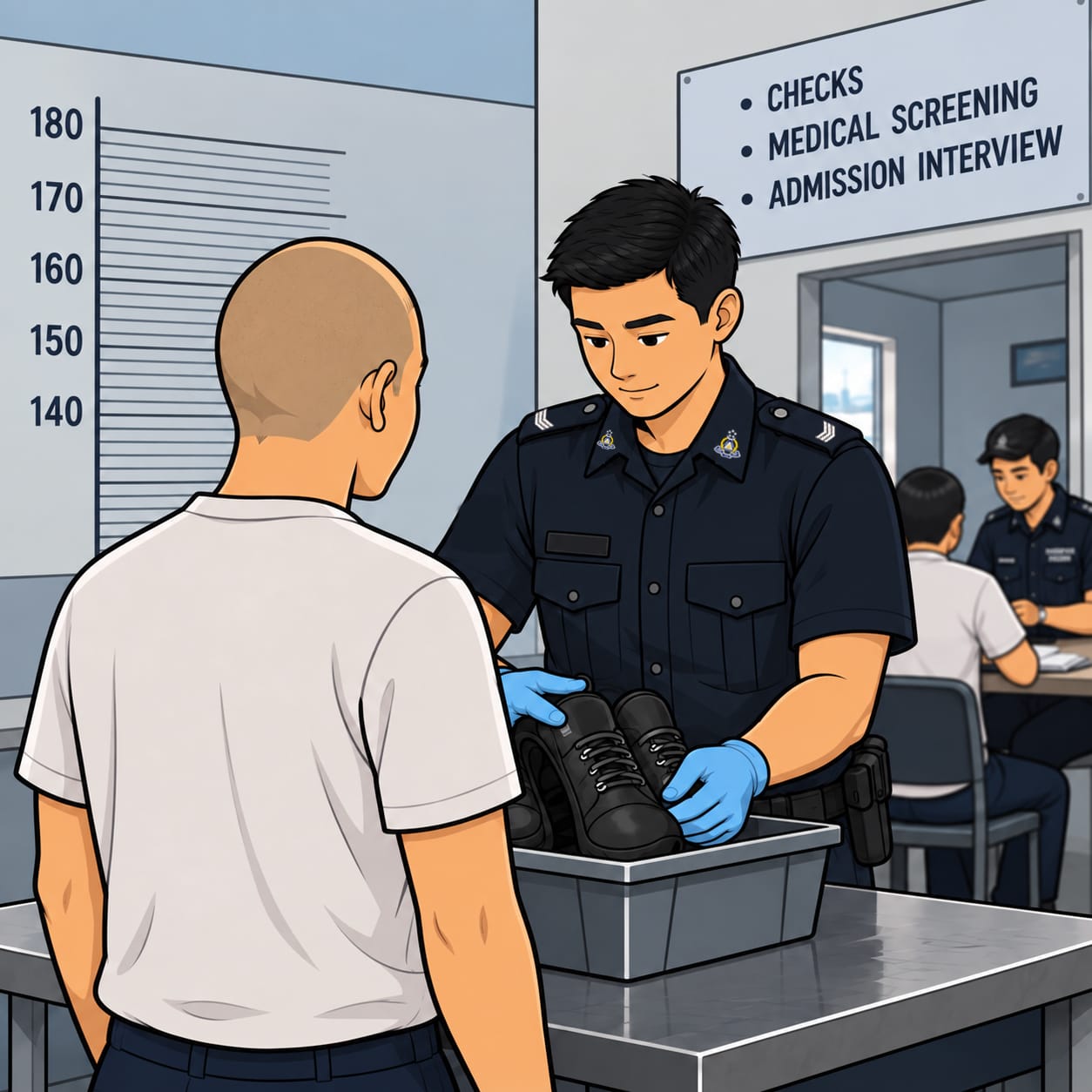
Chapter 1 - The Day Everything Became Real
When I entered prison, I went through the admission process, where my personal belongings were recorded and kept securely.
I went through the checks, medical screening and admission interview, but honestly, most of what I remember was thinking about the people I had left outside.
For the first time, there was nowhere to run from the consequences of my choices.
“I kept thinking: How did my life end up here?”
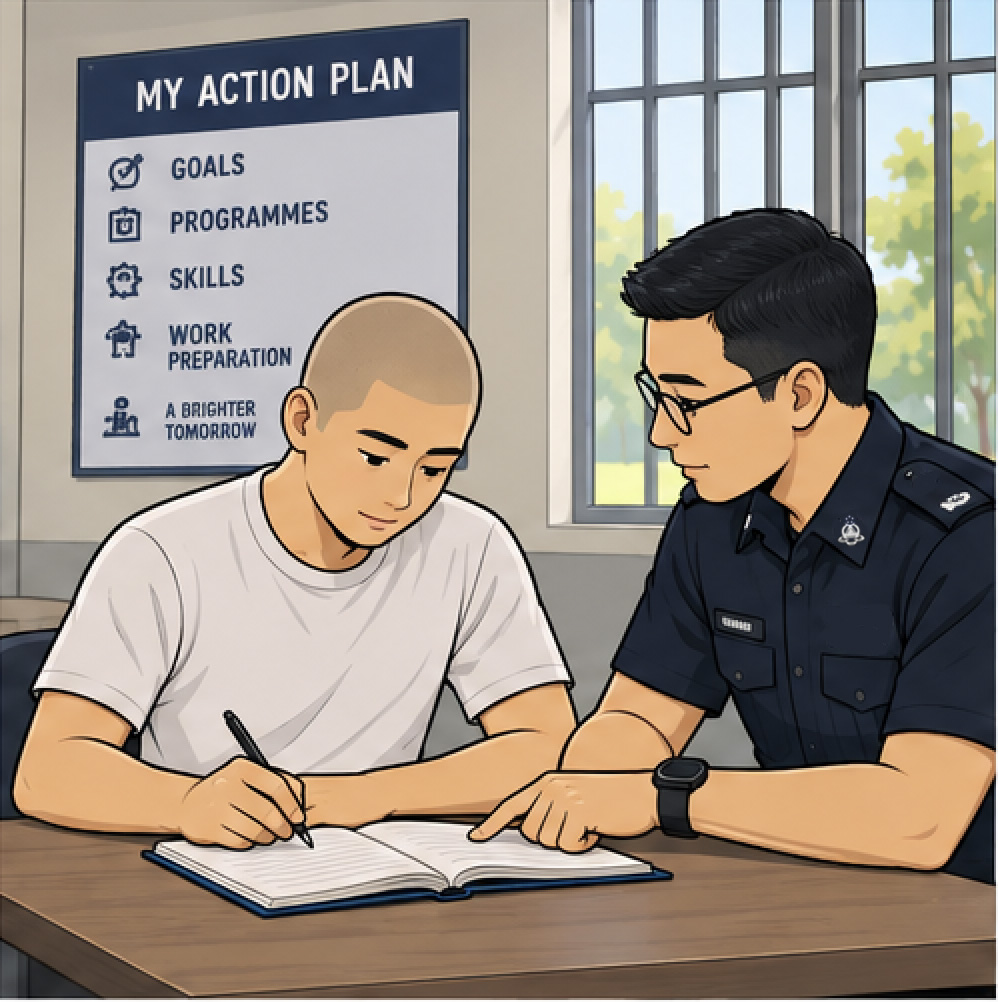
Chapter 2 - Learning to Live Differently
In prison, my days followed a routine that included meals, recreation, programmes, work and learning.
My Correctional Unit Officer started talking to me about my goals through My Action Plan, but at first, I saw it as just another thing I had to complete. I began asking myself harder questions: What choices had brought me here?
And if I went home unchanged, what would stop me from coming back?
“Changing sounded easy until I realised I had to change the way I thought.”
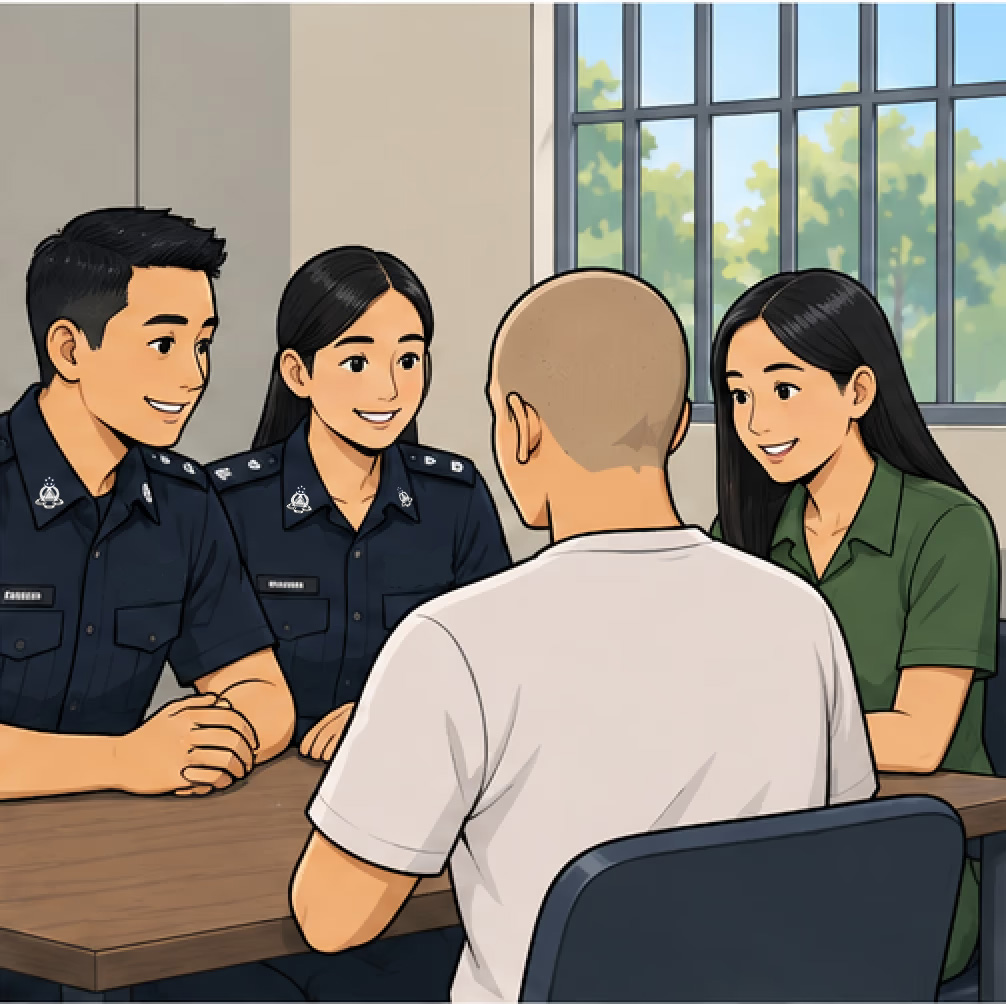
Chapter 3 - People Who Did Not Give Up
Change did not happen because of one programme or one conversation. It challenged me, volunteers listened without immediately judging me, and my family continued writing and visiting even when I knew I had disappointed them.
Every e-letter and visit reminded me that there was still a life outside worth returning to.
“Sometimes you need someone else to believe you can change before you start believing it yourself.”
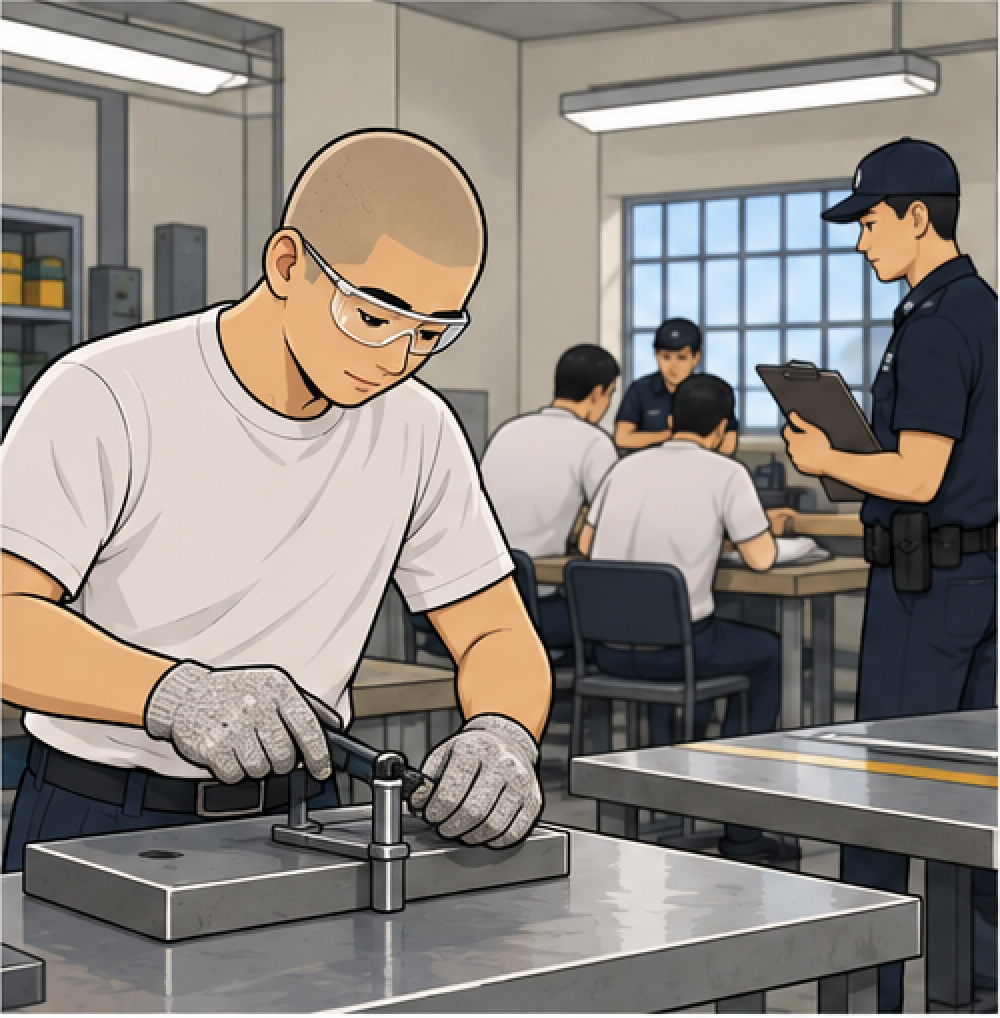
Chapter 4 - Preparing for the Next Step
As I progressed through my journey in prison, my worries changed.
I started thinking about work, money, my family and whether people outside would accept someone with my past.
Skills training and employment preparation gave me something practical to work towards, while the programmes forced me to think about the situations and relationships that could pull me backwards.
“I knew my future would depend on the choices I made, not just the time I served.”
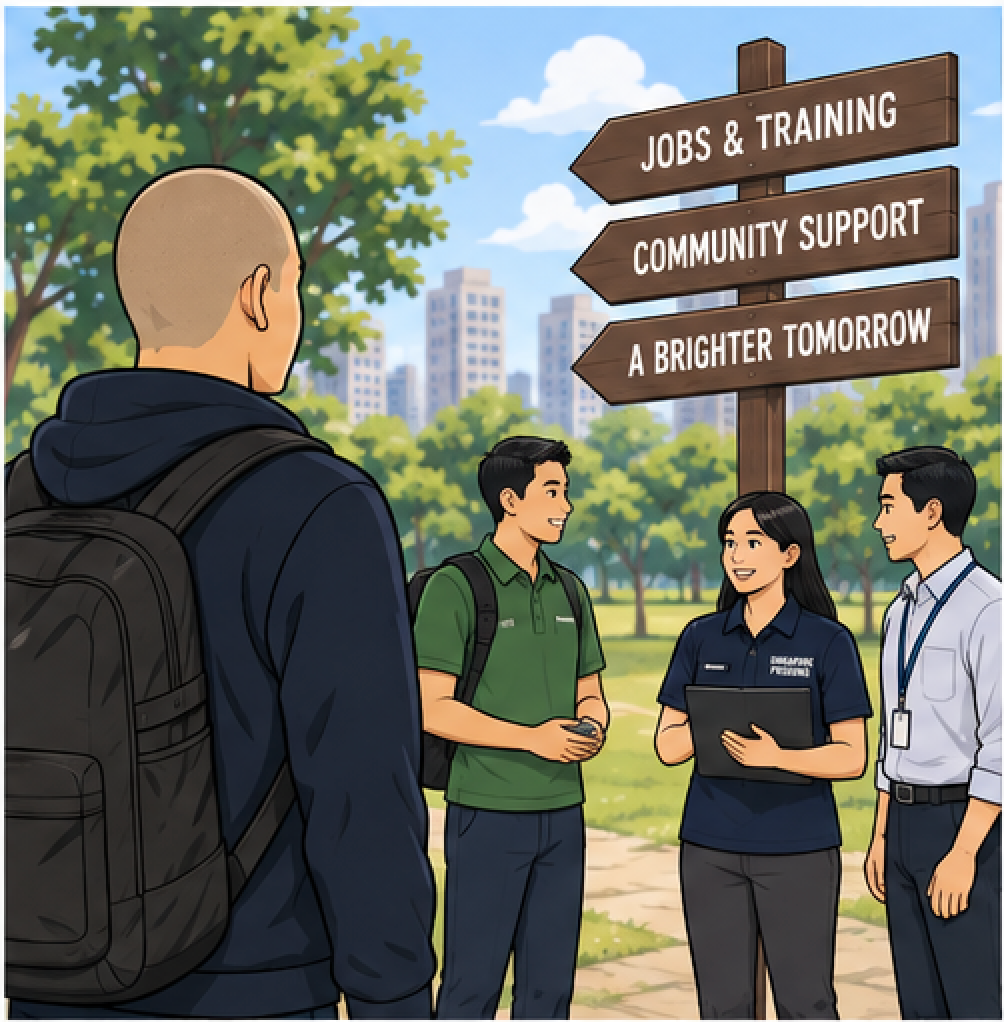
Chapter 5 - The Gate Wasn't the Finish Line
Returning to the community was an important step, but it also came with new responsibilities.
I had to rebuild routines, relationships and trust, while learning how to deal with everyday pressures without falling back on old habits.
Support from family, community partners, volunteers and employment services (opens in new tab) meant I did not have to figure everything out alone.
“Coming home was one day. Rebuilding my life took much longer.”
Being emplaced in a community-based programme is an important step, but it also comes with new responsibilities.
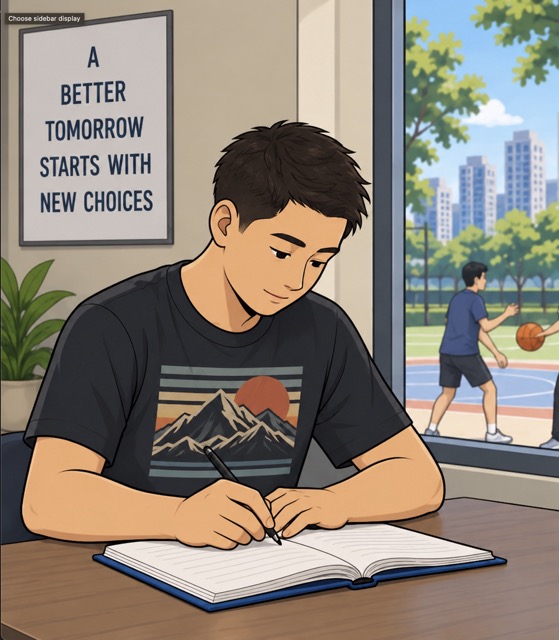
Chapter 6 - Choosing A Different Path
There are still difficult days, and I do not pretend my past has disappeared.
What has changed is how I respond when things go wrong and who I turn to when I need help.
Rehabilitation, to me, is no longer about proving that I am a different person - it is about making different choices, again and again.
“My past is part of my story. I just don't want it to decide how the story ends.”